Can You Play An Electric Guitar Without An Amp?
They make electric guitars to be played with an amp. However, does that mean there is no hope of it being played without one? Amplifiers pave the way toward a great-sounding electric guitar. So, can you play an electric guitar without an amp?
An amp is not required when playing the electric guitar. Amps are optional for personal use. However, during live performances or recordings, an amp is necessary. If an amp isn’t available, electric guitar sounds can be produced through alternative equipment, such as a software-based amplifier.
Given amps are so expensive. There are some creative ways around this issue. Below, we will give you more information on what you need to know about electric guitars, amps, and apps that try to replace them.
When is an Amp Not Required To Play The Guitar?
An amp isn’t required for personal use. An amp is only needed to make the music you are playing louder. You can hear the music you are playing when you play an electric guitar without an amp. It is much quieter, but the metal strings will make enough noise to help you find the right chord.
The one problem: you won’t get that sweet electric sound. You won’t get some of the deep music you can expect from acoustic guitars. Instead, it will be pretty weak and not impressive.
When is an Amp Required To Play The Guitar?
Amps are required during any situation that requires noise or specific sounds. Typically, this is in two situations: live music and recording studios.
A Live Performance Without an Amp
Imagine trying to play sick riffs on your electric guitar without an amp. Short answer: it isn’t happening. In this situation, it won’t take long before you get booed off the stage.
You can even get an amplifier for some acoustic guitars. Output jacks plugged into acoustic systems or microphones close enough can catch them. But, electric guitar players can’t position a mic close enough, because the solid body of electric guitars won’t cause the strings to ring loud enough to be picked up by a microphone.
Electric guitars are also used in bands with drums, a bass guitar, and a keyboard. If these instruments have amplifiers, you need an amplifier as well. Anything else will end up laughed off the stage.
Amps in Recording Studios
When recording music, amps give you a perspective on what your guitar sounds like through an amplifier. Without the amp, you might not find an audio imperfection.
While in recording studios, an amp is necessary because it allows the music to be heard and easily modified during the editing process. Amps allow you, the studio manager, and the recording equipment to hear the full sound that the electric guitar can produce.
It will help ease the editing process and minimize the need for sound editing to improve your performance. It will also make giving audiences what they want during live and recorded performances easier.
The “amps” in recording studios are likelier to be studio monitors. These are specialized music-listening devices that don’t add any optional effects.
You can also expect a guitar with headphones, as the close-and-personal relationship of headphones lets you hear audio details. Guitar headphones need to run through some sort of audio system in most cases. We will revisit this later.
Why Should I Not Play With An Amp?
- Amplifiers are loud. Although you can adjust the volume, that sound, and vibrations can still radiate and disturb those around you (family, neighbors, etc.).
- You don’t have the money. Amps are expensive and can range from $100 to $300 for one of good quality.
- Your practice space isn’t ideal. Electric guitar requires practice, and you can play that instrument in the early morning and late at night. Because of this, it is not the best decision to have that sound blaring out.
- They are big. Many amps are too big to fit in a space. Of course, you can check out some of the best mini guitar amps to solve this problem.
Three Ways To Play an Electric Guitar as an Amp
1. Use a Regular Speaker System (or PA System)
Amplifiers amplify sound, much like speakers. This means you can use any normal amplification system to do it. But, if you want that sound system to make cool sounds, you’ll need a direct input box or preamp.
This is a great option for those who want to save money on purchasing an amp when they already have a suitable sound system. The only downside to this is that any old sound system won’t have the features of a true amp.

- Immersive Surround Sound by SurroundX Technology: SurroundX algorithm converts 2.0 PCM to 5.1 surround signal, which makes sound move around you. ULTIMEA soundbar for tv uses aerospace-grade magnets to have speakers deliver clear and distinct surround sound. Volume of rear surround speakers can be adjusted to 3 levels by pressing surround button on the remote.
- Include 2 Surround Sound Rear Speakers: This 5.1 channel tv sound bar comes with 2 rear speakers and 1 subwoofer, which brings you the cinematic experience with our decoded playback device. A 19.6 feet cable is used to connect surround speakers to subwoofer so you can place surround sound speakers anywhere given your preference.
- Customized Bass and Surround Sound: You can completely control your audio environment by adjusting the surround and bass volume given your preference, creating a truly bespoke audio experience. ULTIMEA sound bar for smart tv with subwoofer owns 3 models at different scenes for you: movie, dialogue, and music. You can switch it to any mode with one press on the remote controller.
- Deep, Room-Filling Bass with Ultimate BassMAX Technology: To deliver a deep and powerful bass, this surround sound system for tv applies BassMAX Technology, enhanced magnetic circuit design, and a larger cabinet to this surround sound system for tv. Volume of subwoofer can be adjusted to 3 levels by pressing bass button on the remote.
- Easy to set up & Decent Design: ULTIMEA sound bars for tv support multiple wired and wireless connection. With the help of ULTIMEA clear instructions, you can easily set it up and start exploring the fun of surround sound. This decent soundbar with subwoofer also allows you to place it on stand, cabinet or under the TV. Perfect to build your home theater sound system.


- 2000 WATT POWER: The wireless karaoke PA portable bluetooth speaker is equipped w/ dual 10″ subwoofer, dual 3″ tweeter w/ 2000-watt peak power / 1000 RMS at 4 ohms for full range surround stereo sound reproduction and impressive bass response.Impedance : 4 ohms.
- COMPATIBLE WITH BLUETOOTH: This box type loud bluetooth speaker system is compatible w/ bluetooth for wireless audio streaming and works w/ devices like iPhone, android mobile phone, iPad, tablet, PC. Ideal for personal indoor home and outdoor use. Best compatible audio source include WAV, FLAC or AIFF.
- 6 INPUTS: Pyle bluetooth speaker karaoke PA system is equipped w/ a USB flash drive & SD card reader so it can serve as an MP3 player, RCA (L/R) & Aux (3.5mm) inputs, two 1/4” mic/guitar input, & FM radio w/ auto scan. Comes w/ wireless microphone.Maximum SPL:128 dB
- FLASHING DJ LIGHTS: The bluetooth party speaker with lights on wheels features multi-color flashing disco LED lights that will add life to any occasion which is great for patio parties or gatherings at night when a colorful presence is noticeable
- DETACHABLE ROLLING WHEELS: These Pyle PA wireless speakers with bluetooth are great for karaoke, stage performances, & crowd control. It is fully portable w/ detachable rolling wheels, & handle so you can take it anywhere you go

- Include Two Surround Sound Speakers: This 5.1 surround sound system comes with two rear speakers and one subwoofer, which creates more immersive surround sound effects while watching movies. Surround speakers connect to subwoofer with a 20-foot cable so you can place surround sound speakers given your preference and the layout of your room.
- Immersive Surround Sound by SurroundX Technology: ULTIMEA applies SurroundX algorithm to convert 2.0 PCM to 5.1 surround signal, which makes you feel that sound comes from multiple directions as in the movie. ULTIMEA sound bars for tv uses aerospace-grade magnets to ensure speakers deliver clear surround sound. Volume of rear surround speakers can be adjusted by pressing surround button on the remote.
- Powerful, Room-Filling Bass with Ultimate BassMAX Technology: To deliver a deep bass, this surround sound system for tv applies BassMAX Technology, enhanced magnetic circuit design, and a larger cabinet to this soundbar with subwoofer. Due to the down-firing speaker, bass can be directed to the solid ground, even extended to other spaces so the distortion can be dramatically decreased. Volume of subwoofer can be adjusted to three levels by pressing bass button on the remote.
- Customized Bass and Surround Sound: You can fully control this home theater sound system by adjusting the surround and bass volume given your preference. ULTIMEA tv sound bar with subwoofer owns three models for different scenes: movie, dialogue, and music. You can switch it to any mode with one press on the remote.
- ULTIMEA Customized Sound EQ software: ULTIMEA highly values individual sound preferences, and we can customize the software given your preference. Customized software includes balanced bass, enhanced bass levels, treble adjustments, improved sound quality, clearer vocals, EQ fine-tuning, volume reduction, etc. If you are interested, please reach out to us.
2. Use a Software Amp for your Mobile Device
Another way to play your electric guitar without an amp is to use an amp simulator. An amp simulator is a computer-based program that simulates an amp. It can change the sound of your guitar, but you still need a way to connect it.
To connect it to your mobile device, you need an adaptor that connects your headphone jack to your phone to your guitar. You can also get a Bluetooth adapter that connects your electric guitar to your phone.

- Support System Software Download : The guitar effects system software can be downloaded, but if you hear sound through the headphones, the output connector will be muted automatically.
- Compatibility: Suitable for smartphone effects, compatible with smartphones or tablets with the same type of connector for iPhone / headphones and iOS and Android systems.
- How to Use : Simply plug the FC-21 converter into the headphone jack of the device and connect the instrument to the FC-21 converter, connecting the output of this converter to an amplifier or other device with line inputs.
- Easy to Install : It is easy to install and can be used for a long time. Useful accessory for electric bass and guitar players
- Useful Accessories: electric guitar / bass to smartphone converter for the perfect sound of the instrument.

- Guitar Interface Converter: It is a device that allows you to connect your guitar to iPhone, iPad, and iPod Touch devices.
- Amplify Guitar Sound: You can directly connect it to a speaker to effortlessly amplify the sound of your guitar without any loss in quality. It also provides a great experience if you want to play quietly with headphones.
- Simple and Sturdy Design: The compact and sleek guitar connector is designed for easy portability, making it convenient for guitar enthusiasts to carry it while traveling.
- Versatile Adapter: This adapter serves as a guitar instrument interface adapter and is easy to use with both guitars and bass guitars. It provides you with a complete guitar studio experience.
- Durable and Reusable: The adapter can be used multiple times and is resistant to damage. It can also be a great gift for guitar enthusiasts.

- 【⚠️Please Note】⚠️This USB C Guitar recording Cord can only be used for audio input, not for audio output. ⚠️This cable is only suitable for recording from 6.35mm to USB C direction, and does not support music playback from USB C to 6.35mm. ⚠️Not for music playing.
- 【USB C Guitar Cable for Recording】 ZOOAUX Guitar to USB C Cable will help us record high-quality digital music. With this USB Guitar cable, you can easily enjoy recording guitar music, and then share your wonderful guitar sound with your friends. NOTE: Not applicable to PS2/PS3/PS4/WII/Xbox Game Devices.
- 【Plug and Play】Use the TYPE-C to 6.35mm guitar cable, insert the 6.35mm plug into the electric guitar interface, and insert the TYPE-C interface into your computer, and your computer will be converted into a recording system. 【Note: This cable is only suitable for recording from 6.35mm to USB C direction, and does not support music playback from USB C to 6.35mm. 】
- 【Hi-Fi Sound Quality】USB C to 1/4 inch 6.35mm Stereo Audio Cable is made of durable and reliable high-quality materials,built-in audio decoder chip for high-quality sound and HIFI audio.
- 【Wide Compatibility and Convenience】This USB C guitar cord is compatible with Windows 98SE/2000/XP/VISTA/Win7/Win 8/Win 10 system. Compatible with most recording software, including Guitar Combo Amps, Audacity, and Amplitude. 【Please note that this cable is not compatible with PC games including PS2/PS3/PS4/Guitar Hero/Xbox/RockSmith, etc. Only suitable for recording instruments. 】
3. Use a Computer Audio interface
An audio interface is the third way to transform almost anything into an amp. An interface converts your audio to digital data. You can edit your audio by using a digital audio workstation (DAW).
Interfaces have the added advantage of allowing you to edit aspects of your sound. Some have bass and treble settings, while others have input and output settings to control distortion and sound. But since they are used to produce music, they can be just as expensive as amplifiers.

- Mini audio interface, portable internal recording sound card for live streaming to connect smartphone and electric guitar, bass.
- Synchronize audio and video. Output the audio to smartphone directly, low latency, low interference, high fidelity recording.
- USB-C and Lightning for smartphone, The 6.35mm jack to connect electric guitar bass and the 3.5mm jack supports monitoring.
- Plug and play without charging. Back clip design and pocket storage, flexible and convenient to record at anytime and anywhere.
- High sensitivity & active detectivity, if the volume is too high resulting in distortion, the indicator light will turn from green to red.

- [3-In-1 1/4-In Audio HUB] – Cubilux HLMS-C5 turns the USB port into a stereo line-in jack, a mono MIC jack, and a headphone jack, enabling an efficient setup for podcasting, live streaming, vlogging, instrumental performances, music production, etc.
- [Versatile Connectivity] – The line-in jack allows you to record music demos from mixer or AMPs or simply connect instruments like guitars or keyboards; The MONO MIC jack supports powerless microphones; and the headphone jack enables software monitoring at ease. Whether you’re recording or practicing, the Cubilux HLMS-C5 offers the flexibility you need.
- [Dual-Track Recording] – Cubilux HLMS-C5 simplifies the recording process by splitting connected devices into 2 separate channels for easy blending or individual recording.
- [Powerless Portable Design] – No need for an external power source. The Cubilux HLMS-C5’s compact and portable design is perfect for on-the-go recording, providing the flexibility to capture inspiration wherever it strikes.
- [Compatible with Computers & Laptops] – The Cubilux HLMS-C5 is compatible with computers and laptops with USB Type C or Thunderbolt 4/3 ports. Please note that it does not support phones or tablets.
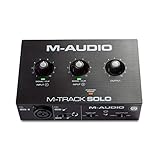
- Podcast, Record, Live Stream, This Portable Audio Interface Covers it All – USB sound card for Mac or PC delivers 48 kHz audio resolution for pristine recording every time
- Be ready for anything with this versatile M-Audio interface – Record guitar, vocals or line input signals with one combo XLR / Line Input with phantom power and one Line / Instrument input
- Everything you Demand from an Audio Interface for Fuss-Free Monitoring – 1/8” headphone output and stereo RCA outputs for total monitoring flexibility; USB/Direct switch for zero latency monitoring
- Get the best out of your Microphones – M-Track Solo’s transparent Crystal Preamp guarantees optimal sound from all your microphones including condenser mics
- The MPC Production Experience – Includes MPC Beats Software complete with the essential production tools from Akai Professional
Three Ways To Keep Your Amp Quiet
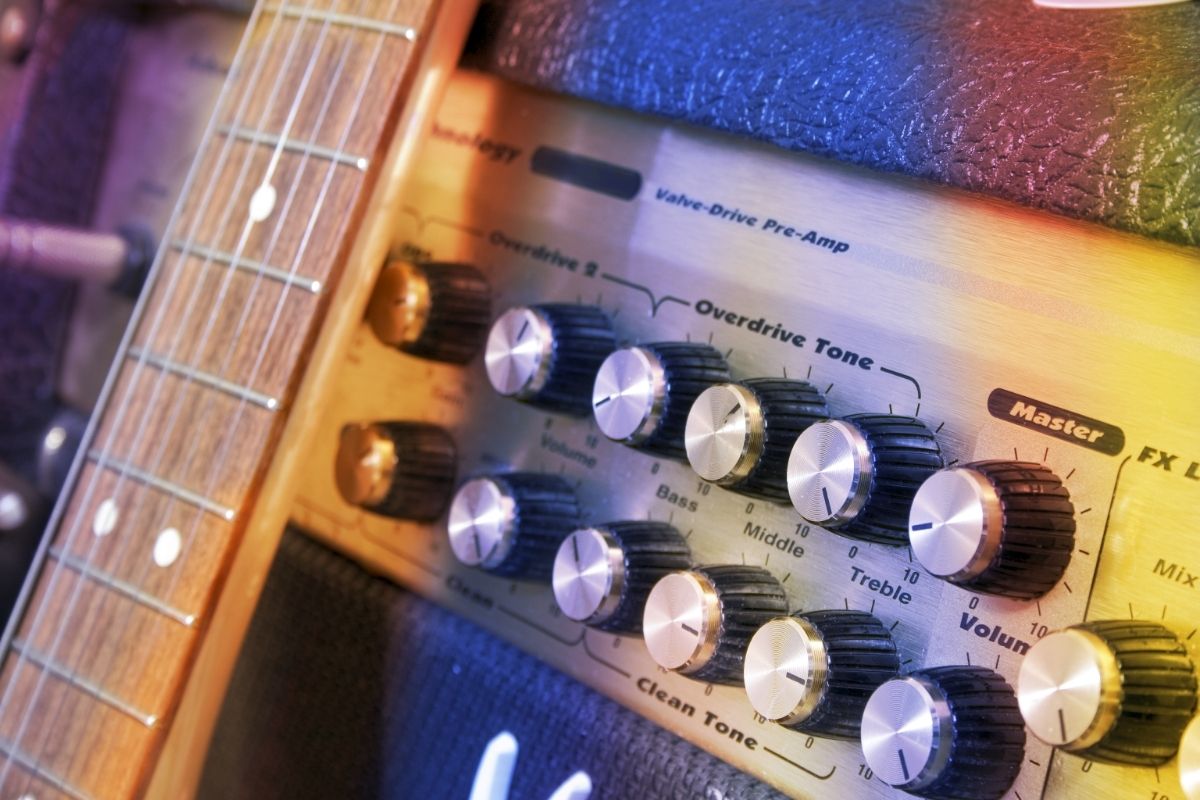
- Use headphones: Many amps come with headphone slots, and some have Bluetooth capabilities. Check your amp to see your options, and go out to get yourself some headphones.
- Control the volume: Reduce it to see if it meets your neighbor’s needs. It might not work, but it’s worth a try!
- Soundproof your room using acoustic foam: Soundproofing foam is expensive but great if you want to experience your sound. It might not limit the noise completely, but it will help.
You can also check with your neighbors to ask if there’s a time to play that won’t disturb them. Some people will be inflexible when you ask this.
That would be best if you can practice elsewhere (like a sound studio). But, most people don’t have access to a studio.
Here’s some more tips:
What Volume Levels Can an Amp Do?

The volume levels of an electric guitar amp will depend on the quality of the amp, such as brand, model, wattage, and type (solid state and valve or low- and high-powered). The noise level will also change depending on the crowd and room size if you are performing live.
Solid-state amps are the most common type of amp, followed by valve amps. Low- and high-powered amps are used equally.
Here are some amp wattage recommendations for different scenarios.
- For practice only: 10W (valve) or 20W (solid state)
- Live performances without a drummer with less than 100 people: 20W (valve) or 40W (solid-state)
- Smaller performances with a drummer: 100W (valve)
- Performances for 100-1000 people: 200W (solid-state)
- Any performances for over 1,000 people: 100W (valve) or 200W (solid-state) with a microphone
- Recording purposes: 10-20W (valve) or 20-40W (solid-state).
You should purchase an amp that fits your needs and what you will use it for most consistently.
Final Thoughts
There are a variety of reasons a person would want to play their electric guitar without an amp. It could be due to expense, a better way to practice, or an amp’s noise.
Electric guitars are great to play and much loved, but they are loud, and with this loudness comes complaints. It is important to prepare before buying the guitar. Consider practice times, purchase headphones, even go as far as soundproofing a room.
You can play electric guitars with and without an amp and although the sound may differ, it is important to play so you will enjoy.